
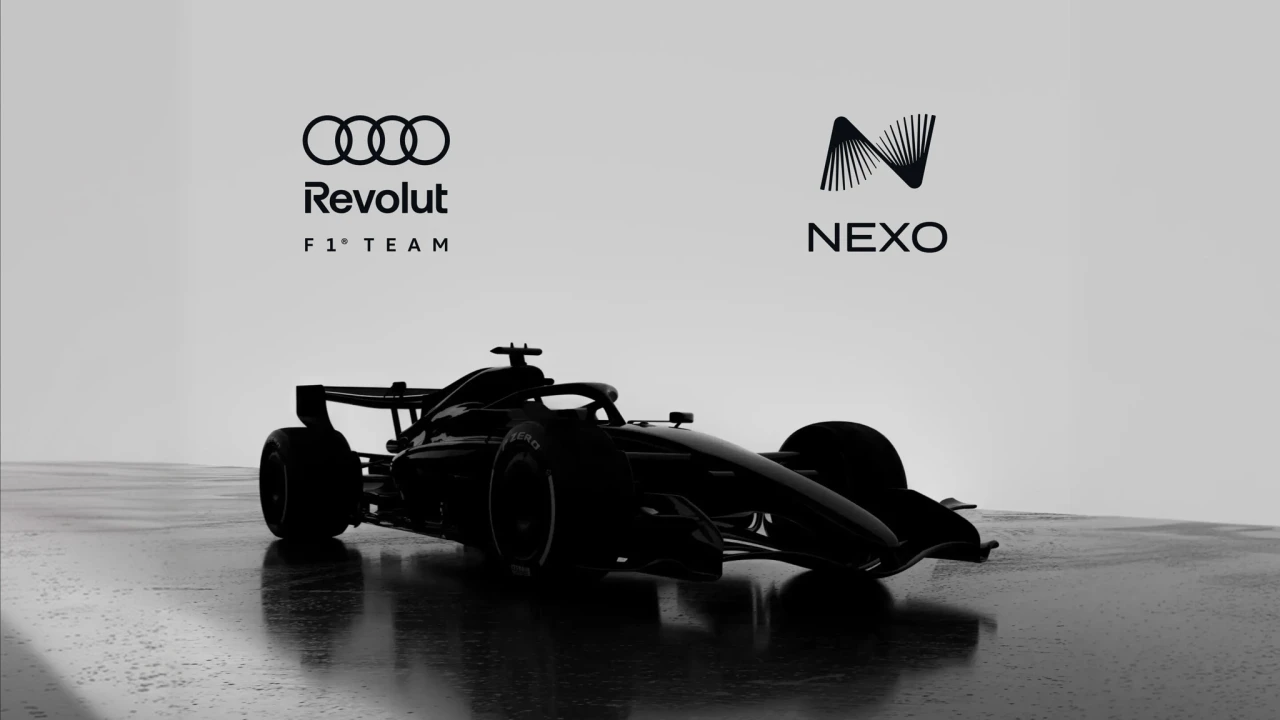
This season Audi joins Formula 1 for the first time, and one of the first things its new team did was hire a company to clone its drivers. ElevenLabs, an AI voice startup founded in 2022, will let the team speak to fans in the drivers' own voices, in more than thirty languages, without Nico Hülkenberg or Gabriel Bortoleto ever recording a word.
The timing isn't an accident. 2026 brings the biggest rule change in Formula 1 history, a near-even split between electric and combustion power and a clean reset of the order. Audi didn't just enter the sport. It entered the one season where the whole grid starts over. It took over the Sauber team, built its own engine, and showed up in Berlin with a titanium and lava-red car and a partner list that looks more like a startup demo day than a paddock.
Start with the voices, because that's the part that should make you sit up. A kid in Jakarta and a kid in São Paulo can both get a personal update from Nico, in Nico's voice, in their own language, and neither message is real. Another partner, Perk, is an AI company too, quietly handling the team's travel bookings, expenses, and invoices across twenty-four races a year. One machine to talk to the fans, another to do the paperwork.
Here's the part nobody says out loud. Revolut, the fintech that put its name on the team, at least wants the crowd. Signing up young customers is its whole game, and F1's audience skews exactly that young. But ElevenLabs and Perk sell to other businesses, not to people in grandstands. Their customers will never see that car. So why pay to be on it? Because Formula 1 is where a young company goes to look old. A three-year-old startup can't buy a decade of trust, but it can buy a spot next to Audi and let the association do the work.
Trackside this season. The car's the same idea it's always been. The names on it are new.
Here's what a car guy keeps circling back to. F1 sells itself as the last truly human sport: real people, real fear, real mistakes at three hundred kilometers an hour. But the tech pouring in didn't come because the sport got more human. It came because the sport got more scalable. The drama now travels as content, and content is the one thing these companies know how to mass-produce.
The uncomfortable part isn't that the synthetic Nico exists. It's that most fans won't be able to tell, and the ones who can won't care. That isn't a flaw in the plan. That is the plan.
I'll still be in front of the race on Sunday. I just won't mistake the voice in my feed for the man in the car.
No comments